 emark책갈피
Exploring the History of the Han River
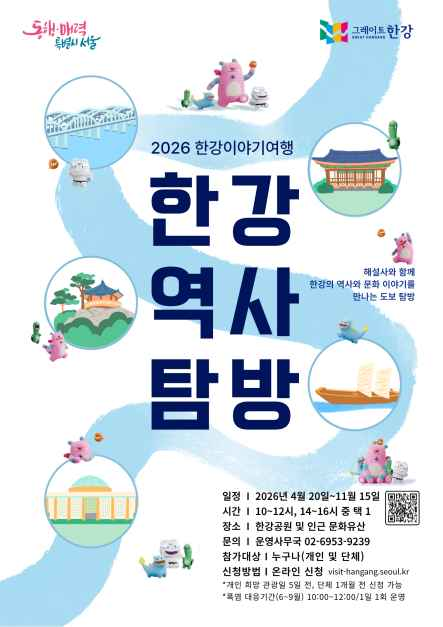
2026.04.20 ~ 2026.11.15 · - Session 1: 10:00 a.m.–12:00 p.m. - Session 2: 2:00 p.m.–4:00 p.m.
330 Yeouido-dong-ro, Yeongdeungpo-gu, Seoul (Yeouido-dong)
About
The “Han River History Tour” program offers engaging guided tours and educational activities that allow citizens and tourists to experience and appreciate the Han River waterfront by exploring its scenery and historical and cultural resources. It also aims to revitalize the history and culture of the Han River as part of everyday life by developing a variety of content—including hands-on activities—that allows citizens to actively participate and experience the area firsthand. Participants walk along designated routes through the Han River basin and nearby cultural heritage sites while listening to commentary from Han River tour guides. The Han River History Tours consist of a total of 16 routes, and participants can explore the history of the Han River related to each route as they walk along it.
Program
Course 1 (Gwangnaru-gil): Focuses on the origins of the Gyeonggang River and war; the main route runs from Pungnap Earthen Fortress to the Statue of Lady Domi, then to Gwangjin Bridge 8th Street, and finally to the Gwangnaru Landing marker Course 2 (Songpa Ferry Road): Focuses on the formation and development of the city; the main route includes the Samjeondo Stele – Seokchon Lake – the Songpa Ferry marker – the Seokchon-dong Tomb Complex Course 3 (Ttukseom Ferry Trail): Focuses on the founding of the Joseon Dynasty and the timber collection center; the main route includes Jeonggwanwon – Majodan – Salgote Bridge – Jungnang Stream – Gong’s Bookstore Course 4 (Nodeul Ferry Trail): Focuses on the Confucian scholar’s ideals of loyalty and filial piety; the main route includes Hyosajeong Pavilion – Memorial Stele for the Student Volunteer Army – Han River Bridge – Jugosa Marker – Yongyangbongjejeong Pavilion – Park of the Six Loyal Ministers Course 5 (Dongjakjin Trail): Focuses on the history of Dongjakjin, a feng shui-blessed site; main route: Dongjak Ferry Marker – National Cemetery (Main Gate – Memorial Tower – Patriots’ Burial Ground) Course 6 (Yeouido Ferry Road): Focuses on the “Miracle on the Han River,” with the main route being the National Assembly Building – Yeouido Park (Culture Plaza – Forest of Tradition) – Mulbit Plaza in Yeouido Hangang Park Course 7 (Seogang Ferry Road): Focuses on the transportation of grain and fish; the main route runs from Gwangheungchang to King Gongmin’s Shrine – Bamseom Bugundang – Seogang Ferry Marker – Bamseom Park Course 8 (Yanghwa Ferry Road): Centered on the influx of foreign cultures, the main route runs from the Foreign Missionaries’ Cemetery – Yanghwajin Site – Jeoldusan Martyrs’ Shrine – Yanghwa Ferry Marker Course 9 (Seonyudo Trail): Centered on the development of the Han River and the environment, the main route runs from the Seonyudo Origin Monument – Seonyudo Park – Northwest Viewing Deck Course 10 (Gongam Ferry Path): Focuses on Han River folklore and Heo Jun; main route: Heo Jun Theme Street – Gongam Ferry – Heo Ga Rock – Gwangju Rock – Heo Jun Museum(*) Course 11 (Gyeomjae Jeongseon Trail): Focuses on Gyeomjae’s paintings of the Han River; main route: Yangcheon Hyanggyo – Soakru – Gyeomjae Jeongseon Art Museum(*) Course 12 (Nanji Flower Island Trail): Focuses on the past and present of Nanji Island; the main route is World Cup Stadium – Bulgwang Stream – Peace Park – Nanji Han River Park – Culture Reserve Base Course 13 (Han River Centennial Bridge Trail): Focuses on the Gyeongui Line railroad and the modern history of the Han River; main route: Yongsan Railway History Museum – Hangang-daero and Hangang Bridge – Han River Railroad Bridge – Saenamteo Cathedral – Railroad Officers’ Quarters Course 14 (Dongho Ferry Trail) *Formerly Gosanja Trail: Focuses on Dongho Ferry, a scenic spot along the Han River; the main route runs from Jungnang Stream – Eungbongsan Mountain – the marker stone at the site of Musoemak – Ichon Han River Park Course 15 (Mapo Naru Trail): Focuses on the various facets of the Han River shaped by Mapo; the main route is: Boksakkkot Children’s Park – Site of Damdamjeong Pavilion – Monument Commemorating the Origin of the Mapo Terminal – Mapo Naru Sculpture – Site of Tojeong Lee Ji-ham’s House – Jeong Gu-jung’s House Course 16 (Seobinggo Trail): Focuses on the storage and distribution of ice during the Joseon Dynasty. The main route runs from the Seobinggo marker stone to the Seobinggo Bugundang, Han River Art Park, Han River Mansion, and Geobukseon Landing. - Courses operate only if at least 5 people register per session (Capacity: 5–15 people per session) - However, for the Yanghwa Landing Route, which includes a visit to a cemetery, participation is limited to a minimum of 5 and a maximum of 7 people. - Admission to museums and other sites marked with an asterisk (*) that require an entrance fee, as well as guided tours inside these venues, are not provided.
Details
More festivals

Painters

Gwangalli M (Marvelous) Drone Light Show
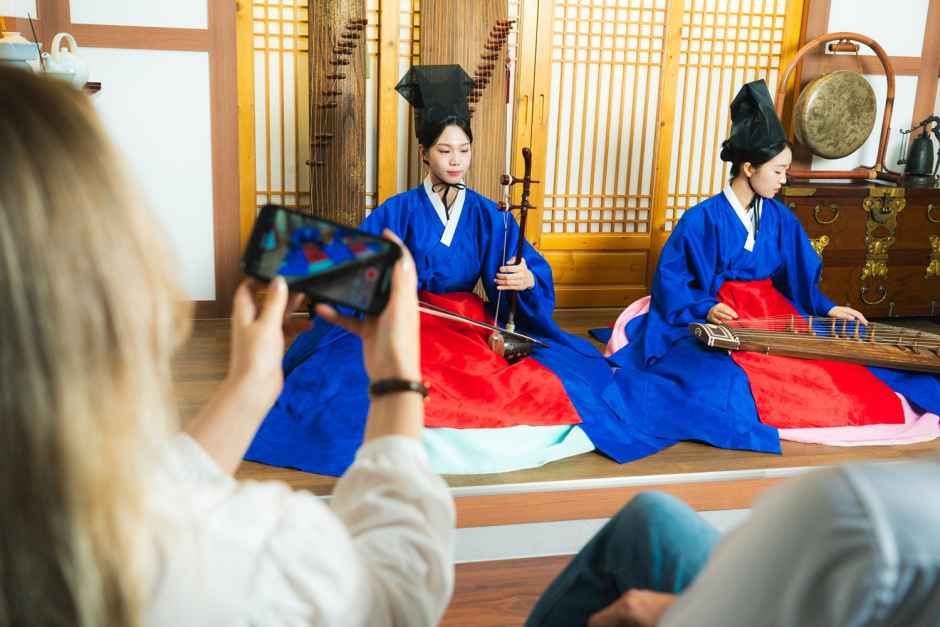
Traditional Korean Music Performance: Jinyeon